I Want to Be Your Friend
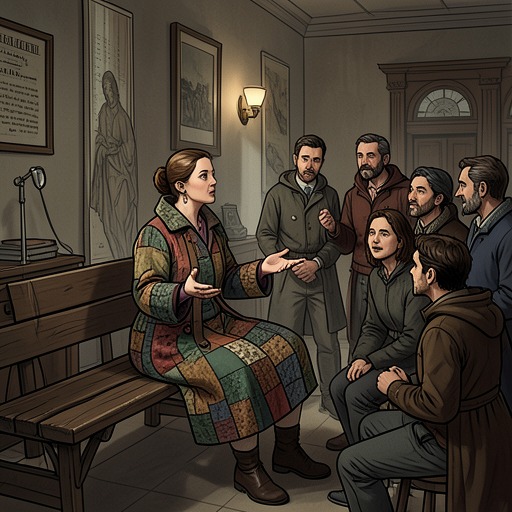
Cinnamon Bun“I Want to Be Your Friend” is a recurring expression and governing impulse associated with Broccoli Bunch. It begins as an apparently cheerful introduction, but develops into a practical method for surviving encounters, negotiating passage, building alliances, and refusing to abandon a relationship merely because its first response is rejection. The phrase’s decisive significance lies in the way it converts friendship from a hoped-for feeling into repeated action: greeting, sharing, explaining, waiting, protecting, and trying again.
An Introduction Made Under Threat
Broccoli first uses the expression while confronting a swarm of pixies. The situation is not socially safe: the pixies form a glowing grid in the air, their leader attacks the ground with a line of fire, and Broccoli recognizes that fighting roughly thirty angry spellcasters would probably be fatal. Instead of answering hostility with force, Broccoli puts on a cheerful smile, identifies herself as Broccoli Bunch, and says, “I want to be your friend.” The friendliness is not evidence of fearlessness; the surrounding narration makes clear that the smile conceals a slight tremble. The declaration therefore functions as courage through vulnerability, placing Broccoli directly in the danger zone while attempting to change the terms of the encounter.
The pixie negotiation turns the expression into a material bargain. Broccoli opens a jar of honey, tastes it to demonstrate its value, and offers the entire jar in exchange for safe passage. She acknowledges that the rain makes fighting especially undesirable and proposes sharing rather than attacking. The gesture links friendship with hospitality and exchange, but not with naïveté: Broccoli understands the danger, assesses the limits of her combat ability, and chooses an offer that can accomplish what violence cannot. The later unlocking of the general skill Friendmaking, awarded after Broccoli repeats a Special Action enough times, gives the pattern a system-level confirmation. Her repeated social behavior becomes an actual capability within the world’s leveling structure.
From Greeting to Persistence
The same language appears when Broccoli meets Noemi on the journey toward Port Royal. Noemi interprets Broccoli’s attempts at conversation as flirtation and remarks that she would read such behavior differently if Broccoli were a grenoil boy. Broccoli rejects that interpretation directly: she wants only to make friends. The exchange shows that the expression is not limited to harmless first meetings; it also clarifies Broccoli’s intentions when another person imposes a different social meaning on her enthusiasm. Even after Noemi tells her to make friends elsewhere, Broccoli continues trying to find an appropriate conversational opening rather than treating the rebuff as a final verdict.
Broccoli’s introduction to Amaryllis Albatross makes the same impulse more difficult and more consequential. Rainnewt identifies Broccoli as Amaryllis’s partner, and Broccoli immediately announces her name and hopes that they will become the best of friends. Amaryllis responds by questioning whether Broccoli represents the best the Exploration Guild can provide. Broccoli answers that she is capable of handling herself, then explains that friendship costs nothing and requires no payment. She presents herself as a Cinnamon Bun whose class is oriented toward support, admits that she is poor at combat and better at talking, and introduces Orange Bunch as a spirit kitten companion whose strengths include affection rather than fighting. The self-portrait is unusually open: Broccoli offers weakness, purpose, family origin on Earth, and companionship all at once, asking Amaryllis to know her before judging her.
Amaryllis’s resistance does not make Broccoli abandon the claim. When the harpy remains rude and their first hope of friendship seems to dissolve, Broccoli explicitly decides not to give up. She says she will not give up on trying to become Amaryllis’s friend, and later insists that rudeness will not stop her. The repetition changes the phrase from an invitation into a vow. Broccoli is not claiming that friendship already exists; she is committing herself to the work of making it possible.
Friendship as Action Rather Than Sentiment
The expression reaches its clearest practical form during the journey through wet, dangerous country. Amaryllis and Broccoli leave the cultivated area for terrain marked by brackish puddles, and swarms of mosquitoes approach them as though they were prey. Broccoli uses a bug-repelling rune purchased in Port Royal, feeding mana into the bracelet so that the insects retreat. This small act sits beside her verbal persistence: friendship is not merely cheerful speech, but protection, resource sharing, and attention to another person’s condition.
After the pair survives harrowing experiences and Broccoli saves Amaryllis, Broccoli realizes that she is grinning far more brightly than usual because she believes she has made a friend. Amaryllis challenges that conclusion, asking whether shared danger and rescue automatically make them nest buddies. The scene preserves an important tension in the expression. Broccoli’s emotional certainty and Amaryllis’s guarded definition of friendship are not identical, and the recognition hurts Broccoli enough to bring tears to her eyes. Yet the disagreement does not erase the relationship. The phrase remains valuable precisely because it marks an aspiration that must be tested against another person’s boundaries rather than simply declared successful.
The wider plot gives Broccoli’s persistence institutional consequences. When Mathide considers removing her from the Exploration Guild amid the crisis caused by Rainnewt’s disappearance, Broccoli is prepared to leave if the guild will not have her. Amaryllis objects to the expulsion, while Abraham proposes a compromise: he can take both women west to Greenshade and deliver them to the smaller guild branch there. Mathide agrees to let Broccoli accompany Amaryllis because Amaryllis trusts her. Broccoli then tells Mathide that it is never too late to become friends and that she understands why Mathide tried to expel her. In this context, “I Want to Be Your Friend” becomes a response to judgment and conflict, not a denial that wrongdoing or danger exists. Broccoli can acknowledge institutional hostility while still leaving open the possibility of reconciliation.
Relationships and Wider Reach
The expression first appears amid Broccoli’s encounter with the grenoil party. Donat races ahead and announces to Emeric and Arianne that they have found a human. The party gathers around Broccoli while the ranger remains behind her, and the meeting is framed by a camp with a tent, a cauldron, stew, and freshly prepared meat. Broccoli’s impulse toward connection therefore operates across species and unfamiliar social groups from the beginning. Later, when Leonard asks what Broccoli knows, she retrieves her map of Threewells and offers it as a possible bargain, showing that her approach to others combines friendliness with information, negotiation, and practical exchange.
Her farewell to the grenoil party also reveals the cost of these brief connections. After shaking hands, Broccoli watches the group depart and hopes that they may meet again, imagining that it would be pleasant to belong to the same group. The experience has already produced the Friendmaking skill, but the immediate relationship remains uncertain and incomplete. The expression thus accompanies both connection and separation: Broccoli can form a bond without possessing it permanently, and the possibility of future reunion becomes part of what friendship means to her.
Broccoli’s relationships consequently expand through repeated low-power interventions rather than a single triumph. She approaches pixies with honey, speaks through Noemi’s suspicion, introduces herself honestly to Amaryllis, protects a companion from mosquitoes, and remains open even toward Mathide after an attempted expulsion. Orange Bunch further embodies the same relational orientation. Broccoli presents Orange not as a weapon but as a spirit kitten companion valued for snuggles, making companionship itself part of how she explains her identity and capabilities.
Narrative Meaning and Limits
The expression creates a deliberate contrast between Broccoli’s social optimism and the dangers around her. She is not a strong combatant, and she openly says that her class is support-oriented and that she is better at talking than fighting. “I Want to Be Your Friend” therefore serves as a form of agency suited to her actual abilities. It does not make hostility disappear: the pixie leader still attacks, Noemi still dismisses her, Amaryllis still doubts her, and Mathide still supports removing her from the guild. What changes is the range of possible responses. Broccoli repeatedly replaces escalation with an offer, a disclosure, a protective action, or a promise to continue trying.
The expression also carries irony. Broccoli calls friendship a free service, yet her friendliness demands risk, emotional exposure, time, and persistence. The honey offered to the pixies is a literal cost; the encounter with Amaryllis costs her pride and brings her close to tears; the guild crisis places her membership and future at stake. Friendship is free in the sense that nobody needs to purchase Broccoli’s goodwill, but it is not effortless. The narrative makes that distinction visible by repeatedly placing her bright declarations against fire, rain, professional suspicion, dangerous roads, and the prospect of rejection.
By the time Amaryllis trusts Broccoli enough to insist that she remain with the guild, the expression has acquired consequences beyond speech. It has helped produce a skill, enabled passage through a hostile encounter, shaped Broccoli’s partnership with Amaryllis, and supported her continued place within the Exploration Guild despite a procedural crisis. Its deepest function is not to guarantee that everyone becomes a friend. Rather, it defines Broccoli’s chosen method of meeting the world: she treats strangers as possible companions, treats rejection as incomplete rather than absolute, and turns the repeated act of reaching outward into a recognizable power of its own.